





2006/05/14

New Contributions

S. M. Tora's Contribution

Sheikh Bilal's Contributions

China is driving this


Faces kidnapping, murder charges

Allegations `are not valid": Lawyer

May 13, 2006. 01:00 AM
RICHARD BRENNAN
GTA BUREAU CHIEF


A Burlington Islamic religious leader being held in Uzbekistan has been charged with murder and kidnapping in neighbouring Kyrgyzstan in central Asia, his lawyer confirmed yesterday.
But Chris MacLeod told the Toronto Star the charges against Huseyincan Celil, a local imam, can be easily refuted, saying Celil was a refugee in Turkey when the alleged incidents happened in Kyrgyzstan in March and June 2000.
"We are now compiling our documents to refute those charges and we are not going to have much difficulty at all with that as he was in Turkey under UNHCR (United Nations High Commissioner for Refugees) administration at the time," he said. "These charges are not valid. They are as far out there as you can get."
Celil, a human-rights activist jailed for working on behalf of the Uighur population in China's northwest Xinjiang province before his 1998 escape, was arrested in March while trying to renew his visitor's visa in the Uzbek capital of Tashkent.
Celil, 37, was sentenced in absentia to death by a Chinese court for founding a political party to work for the rights of the Uighur people.
MacLeod said he is convinced "China is driving this" and that Kyrgyzstan is acting as an intermediary state. It is believed that even if Celil was transferred to Kyrgyzstan, he would simply be sent to nearby China.
"We've got UNHCR documents that say ... around June 14, 1999, that he is accepted ... as an official refugee in Turkey ... and he was with his wife and disabled son," he said.
The allegations are that Celil killed People's Republic of China delegates while in Bishkek, the capital of Kyrgyzstan, in March 2000, and then returned and kidnapped other PRC officials in June, MacLeod said.
"They had to come with something to hold him," he said. "It makes absolutely no sense for him to leave his wife and his newborn son to fly back to Kyrgyzstan, where he already had problems, commit crimes and then fly back," he said.
Celil and his family, who arrived in Canada as refugees in 2001, settled in Hamilton, where he became active in the Muslim community. The family moved to Burlington last year.
MacLeod said he would be providing the federal government with the necessary documentation next week to refute the charges, complete with pictures of Celil in Turkey, as well as statements from other people who were with him in Turkey.
Canadian officials could not be reached for comment.
MacLeod said Celil is getting weekly visits from officials from the Canadian consul in Uzbekistan, "and it is my understanding that he is in good health."
"We continue to request the government to push aggressively for his release and return to Canada," he said.

2006/05/10

China 'crushing Muslim Uighurs'

2006/05/09

Burlington man accused of terrorism

Family, friends deny charge
By Daniel NolanThe Hamilton Spectator(May 9, 2006)
The Uzbekistan government is accusing a Burlington father of six it is holding in jail of being a terrorist linked to two attacks in Central Asia six years ago.
But his lawyer and a friend say the story has been concocted by the government to back up their detention of Huseyincan Celil, 37, and to try and ease the heat it is facing for his imprisonment.
Celil's detention since March has drawn the attention of human rights groups across the globe, including Amnesty International. Prime Minister Stephen Harper's parliamentary secretary, MP Jason Kenney, has also expressed concern about his fate and Ottawa has dispatched a consular officer from Moscow to keep tabs on the situation.
"We knew they had to come up with something to detain him," said Chris MacLeod, a Hamilton lawyer who is liaisoning between Celil's wife Kamila, and the Canadian government, over his imprisonment.
"It's absolutely not surprising. Whatever the currency of the day is ... if this was the early 1990s, it was the war on drugs. Now, you've got a war on terror. I fully expected them to make some sort of allegation."
Uzbek authorities alleged on the weekend they have proof Celil, a member of the minority Uyghurs in China's Xinjiang province, is a Uyghur terrorist wanted by both China and the neighbouring nation of Kyrgyzstan. He came to Canada in 2001 and is now a Canadian citizen.
They say he is really Guler Dilaver, an Uyghur who had Turkish citizenship, and is wanted by Kyrgyzstan for the March 20, 2000, slaying of the head of the Uyghur Society in Kyrgyzstan. China wants him for a May 2000 attack on a state delegation in Xinjiang province.
MacLeod and Celil's friend Burhan Celik, of Ottawa, say the allegations are false because Celil was in Turkey at the time of the attacks, under the auspices of the United Nations High Commissioner for Refugees. They are compiling documents, including photos, to show he was in Turkey and plan to present them at a press conference in Ottawa today.
Celil fled Kyrgyzstan for Turkey in 1999. He sought shelter there in the mid-1990s from China, where he advocated for the rights of the Uyghur minority. There are fears he could face execution if extradited to China because of his political work within the Uyghur community.
Celil went to Uzbekistan with his wife and three sons. They visited her family and to see if he could get his other three children out of China, where he had to leave them.
MacLeod and Celik say Celil had a passport in the name of Guler Dilaver. Celik said his friend bought it for $1,000 US after he fled China, as protection if he was ever arrested, because there remains strong respect for a Turkish passport in Central Asia. Celil was arrested by Kyrgyzstan authorities in 1998, and released after admitting his real identity. But Celik said his friend never saw the fake passport again.
"They're just trying to make up a scenario," said Celik about the Uzbekistan's terrorist allegations. "I suggest they go with Stephen Spielberg. He's quite good with this type of movie. This is all made up. He has done nothing wrong."
MacLeod said, as far as anyone can determine, Celil remains in prison in Tashkent, the capital of Uzbekistan. He is suffering stomach pains, which MacLeod believes is linked to ulcers.
dnolan@thespec.com 905-526-3351

2006/05/05

KEEP WRITING LETTERS TO FREE HUSEYIN CELIL

KEEP WRITING LETTERS TO FREE HUSEYIN CELIL

(Ottawa, Canada - 05/04/06) - The Canadian Council on American-Islamic
Relations (CAIR-CAN) is reissuing its action alert calling for Canadian
Muslims to continue writing letters to help free Huseyin Celil, the Canadian
Muslim Imam detained in Uzbekistan.

“My children and I fear for Huseyin’s life everyday,” said Kamila
Telendibaeva, Mr. Celil’s wife, when she met with CAIR-CAN Executive
Director Karl Nickner. “My husband is a Canadian citizen and he should be
treated like a Canadian citizen. I believe the Canadian government has a
responsibility to do everything it can to protect his rights and bring him
home safely to Canada.”

Huseyin Celil, a Canadian Muslim who served as an Imam at a Hamilton,
Ontario mosque, was detained last month during a visit to Uzbekistan and is
facing deportation to China for possible execution. He is currently being
held under house arrest, and is in need of medical assistance for a stomach
problem. He has been denied access to a lawyer.

To read more about Mr. Celil’s case please see:
http://www.haltonsearch.com/hr/bp/story/3476326p-4016309c.html

CAIR-CAN has written to Foreign Affairs Minister Peter MacKay and is also
one of the 12 organizations that have signed Amnesty International’s open
letter to Prime Minister Stephen Harper, requesting he work to free Mr.
Celil from imprisonment in Uzbekistan. That letter can be read here:
http://www.amnesty.ca/archives/open_letter_huseyin_celil2.php

The Canadian government has a responsibility to do everything it can to
protect the rights of all Canadians, even when traveling abroad.

Chris MacLeod, the lawyer for Mr. Celil's family, and opposition MPs have
called on the Prime Minister to personally intervene to help free Mr. Celil
and have him returned home safely to Canada. Please write to the Prime
Minister and urge him to do his utmost to free Mr. Celil.


ACTION REQUESTED:

1. WRITE to Prime Minister Stephen Harper. A draft letter has been provided
below.

2. FORWARD this message to your friends and family.

3. ANNOUNCE this action alert at Friday jumu'ah prayers to tell others in
your community to write letters. Please coordinate with your local mosques
for an announcement to be made.

Please send a copy of your letters to CAIR-CAN at canada@cair-net.org

The Right Honorable Stephen Harper
Prime Minister of Canada
80 Wellington Street
Ottawa, Ontario. K1A 0A2
Fax: 613-941-6900
E-mail: pm@pm.gc.ca


DRAFT LETTER:

Dear Right Hon. Prime Minister Harper

RE: Huseyin CELIL; Canadian Citizen Imprisoned in Uzbekistan

I write to you today out of concern for Huseyin Celil, a Canadian Muslim
Imam who has been detained in Uzbekistan and is facing deportation to China
for possible execution. Mr. Celil is a Canadian citizen who had been
traveling on his Canadian passport when he was imprisoned.

I appreciate the efforts to date of the Canadian government in trying to
free Mr. Celil, however I urge you to continue to do your utmost to protect
the rights of this Canadian citizen. Opposition MPs, such as Paul Szabo and
Dan McTeague, have suggested that you, Mr. Prime Minister, should personally
intervene in this case to secure Mr. Celil’s release. This has been done by
previous Prime Ministers and high ranking politicians for other Canadian
citizens in the past.

I urge you to uphold the responsibilities of your office and ask that you do
your utmost to ensure that the rights of all Canadians are protected, even
when abroad. Please help free Mr. Celil so that he can be returned home
safely to Canada.

Thank you for your consideration of this matter.

Sincerely,

[YOUR NAME]

2006/05/02

Uyghurs Hit By Autocratic States' Cooperation With Beijing


Central Asia: Uyghurs Hit By Autocratic States' Cooperation With Beijing By Gulnoza Saidazimova
Uyghurs in China complain of severe repression and discrimination (file photo)
(epa)
An Uyghur political dissident from China, Huseyin Celil, remains in detention in Uzbekistan. Celil -- who is now a Canadian citizen -- was arrested in March in Tashkent at the request of Chinese authorities. Human rights groups fear that Celil might face torture and even death if extradited to China. Meanwhile, two more Uyghur men have been in detention in neighboring Kazakhstan. Observers say Uyghurs are victims of cooperation between the autocratic states in Central Asia and China.
PRAGUE, April 28, 2006 (RFE/RL) -- Thirty-seven-year old Huseyin Celil, an ethnic Uyghur originally from northwestern China, was detained in Tashkent on March 27.
Celil was with his wife and three children visiting his in-laws in Tashkent. He was detained while applying for a renewal of his Uzbek visa.
Amnesty International says it has documented several cases of Uyghurs being sentenced to death and executed in the XUAR for alleged acts of separatism and terrorism in recent years.
Held Without Charges
Celil's wife, Komila Telindibaeva, returned to her home in Hamilton, eastern Canada, after several futile attempts to see her husband, who was held by the Uzbek Interior Ministry. She tells RFE/RL that no charges have been brought against Celil so far.
"They (Uzbek authorities) don't say anything, we heard nothing from them," Telindibaeva said. "They don't say what they will do. They haven't said anything to the [Canadian] consul when he phoned them."
Before obtaining a refugee status in Canada in 2001, Celil was a political activist and fought for the rights of Muslim Uyghurs in China's Xinjiang Uyghur Autonomous Region (XUAR), where he was arrested and allegedly tortured. In 1996, he fled to Kyrgyzstan where he also spent nine months in jail at China's request, Telindibaeva says. After being acquitted, Celil fled to Turkey before reaching Canada.
Celil's wife says he has not been involved in any political activity since fleeing China.
Canadian Government Involved
Rights watchdog groups and 12 other nongovernmental organizations expressed concern over Celil's fate saying he is likely to face torture and execution if returned to China. They wrote to Canadian Prime Minister Stephen Harper asking him to intervene personally.
Beth Berton-Hunter, Amnesty International's information officer, spoke to RFE/RL from Toronto.
"That's very much our concern and that's why we've asked the Canadian government to intervene on his behalf as a Canadian citizen and to ensure that he is released and returned to Canada," she said.
Beth Richardson of the Canadian Embassy in Moscow told RFE/RL on April 27 that embassy officials have been in contact with Uzbek authorities about the case. The embassy official is in Tashkent where she met with Celil, Richardson said, but she refused to speak of Celil's current state. Neither did she elaborate on Ottawa's negotiations with Tashkent.
Canadian authorities say they are using all possible diplomatic avenues, including appeals to other countries, to press for the release of Celil from jail.
Prime Minister Harper assigned his parliamentary secretary, Jason Kenney, to personally deal with the case.
Speaking after Celil's wife, Telindibaeva, gave a press conference on April 26, Kenney said it was "outrageous" that the Uzbek authorities detained Celil without any clear explanation as to why or what their interest is in him.
He added that Ottawa is "preoccupied" with Celil's fate and is pressing the case "with full vigor."
Others Also Detained
Meanwhile, two more Uyghur men remain in detention in Kazakhstan.
Thirty-five-year old Yusuf Kadir Tohti and Abdukadir Sidik, aged 30, both originally from the XUAR, were detained in Kazakhstan last month.
Tohti has lived in Kazakhstan since 1996 and worked as a religious teacher. In China, he was accused of promoting separatism.
Sidik fled the XUAR in 1999 after publicly protesting against Beijing's policy on minorities, particularly the family planning policy, which limits the number of children families can have.
Amnesty International's Berton-Hunter says all three men were detained on an extradition request by China.
"There is certainly an arrangement between the different Central Asian countries and China," she says. "What has been confirmed is that they are sending people back to China. What the whole issue is, really, that it's Chinese-driven as far as we can see."
Chinese authorities have accused Uyghurs -- Turkic-speaking Muslims -- of violent Islamic separatism aimed at creating an independent state of East Turkestan in northwestern China.
Official Beijing has labeled separatism, terrorism, and extremism as "three evil forces" and, as many argue, used them as a pretext to crack down on dissent. Experts also say China has used the Shanghai Cooperation Organization (SCO) to target dissidents.
Notably, the three arrests took place before the SCO defense minister gathering in Beijing on April 26, when the group -- which is comprised of Russia, China, and four Central Asian states, marked its 10th anniversary.
Dilshod Rashid, a Sweden-based spokesman for the World Uyghur Congress, tells RFE/RL that Uyghurs have become victims of cooperation between Central Asian states and China.
"When the whole world put diplomatic, political pressure on Uzbekistan after the Andijon events, [Uzbek President] Islam Karimov was [embraced] in Beijing," Rashid said. "This was a demonstration of cooperation between two dictatorial states.
One of the aspects of this cooperation is that in Uzbekistan, Uyghurs and even pro-democratic Uzbeks have been oppressed and thrown in jail. Arrests of people fighting for East Turkestan's freedom and [possible] extradition of them to Beijing is also a result of this cooperation."
History Of Repression In China
Human rights groups say that if returned to China, the three men would be at serious risk, including torture or other ill-treatment, possibly even the death penalty.
Komila Telindibaeva also expressed fear for her husband's future if he would be extradited to China. "I am fearful of China," she said. "He didn't do anything wrong in Central Asia. He was detained only at the request of China."
Amnesty International says it has documented several cases of Uyghurs being sentenced to death and executed in the XUAR for alleged acts of separatism and terrorism in recent years.
The most recent case is Ismail Semed, an Uyghur human-rights activist, who was sentenced to death following deportation from Pakistan to China and was likely executed, the Washington-based Uyghur Human Rights Project said earlier this month.

2006/04/30

Huseyin Celil has been moved out of prison to house-arrest. We thank Jason Kenney for his support.


Huseyin Celil has been moved out of the regular solitary confinement to house-arrest in Tashkent. It is controlled by the Uzbeki apparatus. Canadian Consular staff and his mother-in-law met with him. He looked fine physically but he needed medicine for his ulcer.
April 29, 2006
Kyrgyzstan for the very first time, requested his extradition on bogus allegations. He was alleged to commit crimes at a time he was not even in the Continental Asia. We are hopeful that he will exonerate by means of alibi. If you think you have known Mr. Celil in Kyrgyzstan, Uzbekistan or Turkey, please give us a call or write to us.

2006/04/26

Celil's family, friends appeal to PM


OTTAWA (CP) - The federal government says it is using "all possible diplomatic avenues," including appeals to other countries, to press for the release of Canadian Islamic religious leader Huseyin Celil from jail in Uzbekistan.
Celil, a political dissident who fled his homeland in the mid-1990s before coming to Canada as a refugee and getting citizenship, faces deportation to China and possible execution.
"It is outrageous that the Uzbeki authorities have detained Mr. Celil without any clear explanation as to why or what their interest is in him," the prime minister's parliamentary secretary, Jason Kenney, said Wednesday.
"It is totally unacceptable to the government that it took some three weeks after his initial detention for Uzbeki authorities to permit access by Canadian consular officials.
"We publicly call upon the Uzbekistani government to co-operate fully with Canadian consular officials, which is their international legal obligation."
The statement came after Celil's pregnant wife, Kamila Telendibaeva, held an emotional news conference along with Amnesty International at Parliament Hill on Wednesday, where she read a statement pleading for help.
"We came to Canada (because) we wanted peace and a home to raise our family," she said, stopping repeatedly to fight back tears. "In Canada, we thought that we could speak freely and express our fears.
"Now my husband is facing extradition to the very country he fled from. I ask you, please, don't let them return him to China. . . . I don't want my unborn child or my two boys to ask who their father was or why he can't come home."
The human rights group and 12 other non-governmental organizations have written Prime Minister Stephen Harper asking him to intervene personally to help Celil, who has championed the cause of the Uygur people, an ethnic Muslim minority in China's Xinjiang province.
Kenney said Ottawa is "preoccupied" with Celil's release and has dedicated a full-time consular official out of Moscow to press the case in Uzbekistan "with full vigour."
"We are looking at and using all possible diplomatic avenues to press for his release," Kenney said.
"We have been and will be engaging other countries to assist us in this matter because, quite frankly, Canada has a very modest official presence in the central Asian region. We don't have an embassy or even a consulate in Uzbekistan or in neighbouring countries."
The issue is close to Kenney's heart. He made a controversial departure from a Canadian trade mission in China last year to visit the family of a dissident. He said Wednesday that weaker people suffer continuing, systematic persecution in China, "which is precisely why Canada granted convention refugee status to Mr. Celil in the first place."
Supporters want Canada to ensure legal counsel for Celil.
Celil was arrested in Uzbekistan on March 27 when he tried to renew his visa while the couple and their children were visiting Telendibaeva's family. No charges have been laid.
Telendibaeva returned to Canada last weekend after she was repeatedly denied visits to see her husband in jail. He was apparently arrested on a warrant from China and a ruling ordering his execution.
Amnesty International fears Celil, who escaped prison in China once, will be sent back because of close ties between the two countries and mutual extradition treaties.

Wife of man arrested in Uzbekistan returns alone


Burlington man could be facing death`Canada needs to be very vocal': Lawyer
Apr. 24, 2006. 01:00 AM
NAOMI CARNIOL
STAFF REPORTER
Huseyincan Celil's Burlington townhouse is full of voices. The voices of friends, children and his wife. One voice is missing. His.
After the Canadian citizen's arrest in Uzbekistan's capital Tashkent on March 27, his wife, Kamila Telendibaeva, visited Uzbeki authorities begging for his release before she returned to Canada on Friday evening.
Celil, a Burlington imam, was once imprisoned in China and Kyrgyzstan for working on behalf of the minority Uyghur population in China's northwest Xinjiang province.
His family fears he will be sent to China and killed.
China and Uzbekistan have strong ties. Both belong to the Shanghai Co-operation Organization and the leaders of both countries take a hard stance against political opposition.
The Uzbeki authorities were waiting to see if Celil's fingerprints matched those on file in China and Kyrgyzstan before deporting him. The prints have been matched, Telendibaeva said.
As far as she knows, her husband is still in Tashkent. She knows which detention centre he's being held at.
But the authorities wouldn't let her visit him. "I was allowed to send a letter," she said in Turkish through a translator.
She misses her husband. "We've been married for six and a half years and never had a major argument," she said.
The couple's recent trip was supposed to be a vacation. Telendibaeva hadn't seen her parents, who live in Uzbekistan, in more than six years.
The Celils and their three young children flew to Kyrgyzstan in February to see an ill relative of Telendibaeva's before heading to Uzbekistan. After a month in Tashkent, the family decided to extend their trip.
On March 23, Celil visited Uzbeki authorities to renew the family's visitors' visas. He was told to come back in five days.
On March 27, Celil left for the visa office with Telendibaeva's father and brother at noon. At 10 p.m., Telendibaeva's father and brother returned without Celil.
China re-activated Celil's file in 2002, the family's lawyer, Chris MacLeod said. By that time, Celil had already been living in Canada for a year.
He often led prayers at the Ebu Bekir Islamic Centre in Hamilton. He also gave lectures on religious topics. But he rarely spoke publicly about the struggles of the Uyghur people, his family and friends say.
Three of his children from an earlier marriage remain in China. He was worried if he spoke out they would be punished, MacLeod says.
From time to time, Celil spoke on the radio. Once he attended a conference in Ottawa. That seemed to be enough for China to re-open his file. "The risk of harm he faces in China ... is a direct result of exercising freedom of expression," MacLeod says. Canada needs to be very vocal to the Uzbeki authorities, he says.
Telendibaeva just wants her husband where he belongs, she says. In Burlington. On the chair next to her.

2006/04/22

Brother Celil's Wife Returned


Yesterday around 06.30 pm, Mrs. Kamila Telendibaeva arrived in Toronto International Airport. A Group of her friends, Celil's family lawyer, and media were there to support Mr. Celil's Wife and her children.
As we understood, from her comments, that Brother Celil's situation remains same condition and the help of those who speak and claims for his safe return have not been showing up.

Canadian Government and Officials are being slow at this moment and media’s interests for this subject are not serious.

We pray for Brother Husyincan Celil for his safe return…

One of the regular Letter from President's Office yet...

Dear S.M. Tora:
On behalf of the Right Honourable Stephen Harper, I would like to thank you for your e-mail, in which you raised an issue which fallswithin the portfolio of the Honourable Peter MacKay, Minister ofForeign Affairs. The Prime Minister always appreciates receiving mail on subjects of importance to Canadians.

Please be assured that the statements you made have been carefully reviewed. I have taken the liberty of forwarding your e-mail toMinister MacKay so that he too may be made aware of your comments. I am certain that the Minister will give your views every consideration. For more information on the Government's initiatives, you may wish tovisit the Prime Minister's Web site, at www.pm.gc.ca.

L.A. LavellExecutive Correspondence Officerfor the Prime Minister's OfficeAgent de correspondancede la haute directionpour le Cabinet du Premier ministre

2006/04/19

Huseyin Celil's fingerprints matched


April 17, 2006
We have communicated with Mrs. Celil in Tashkent. She is on her way to Toronto, most probably will arrive on April 21. She could not get sufficient assistance from Canadian officials in Tashkent and she has indicated that Canadian diplomats change so often, neither she nor Consular affairs staff becomes familiar with each other or the case.We sincerely thank Amnesty International's kind efforts for the case. AI Canada brought the issue in front of the Minister of Foreign Affairs as well as other pertinent officials and institutions.We have received telephone calls from supporters from many locations across Canada. Despite the divergent locations we have received telephone calls, they most often converge on an issue as to whether there are levels of Canadian Citizenship -depending on race, ethnicity, place of birth or naturalized/citizen by birth. As advocates of the case, we thought it may be prudent to raise this question on our website. Because we do not really know if there are tiers of citizenship and different denotations. We have conducted a research on the citizenship issue on the Parliament website. It may help you better understand the concept. There are different accounts for the concept. The discussants could not deny existence of different tiers of citizenship. Mr. Lorne Waldman, an expert lawyer on immigration and citizenship has stated"I just want to say that the major concern I have about the legislation in general is what I see as a significant erosion in the rights of certain categories of citizens. We're going to create in Canada two classes of citizens: those who acquire citizenship by birth, either because they are born in Canada or they are born of Canadian parents, in which case they are immune from the revocation proceedings, and those who are naturalized."
April 19, 2006
We communicated with Mrs. Celil in Tashkent, Uzbekistan. She stated that the fingerprints were matched with Kyrgyzstan and China. Further to that, she was informed that both China and Kyrgyzstan have requested Mr. Huseyin Celil be extradited to them. As we know, Uzbekistan requested an Interpol clearance on Huseyin Celil and China and Kyrgyzstan responded positively to the request.She said she was given some of the personal items such as her purse, credit cards and ID's for the children. The Consular staff in Tashkent helped her to get them back.
RFA Correspondent Kamil Tursun conveyed Rabeeya Kadeer's speech to us. She urged the Government of the United States to act immediately to save Huseyin Celil and other human rights activists. She also reiterated that China pressures even most democratic western societies to hand over political dissidents to China as in the case of Ismail Samad and possible Huseyin Celil. She emphasized that despite UNHCR's clear-cut guidelines and regulations, Uzbekistan does not follows the rules and bows to Chinese pressures. This also indicates that it is time to globally caution Uzbekistan for their non-UN-compliant activities and possible referral to UN Security Council where China also holds a permanent seat.
Morteza Jafarpour, SISO's Executive Director, emphasized their commitment to refugee and immigration issues as well as human rights activism. Therefore, he stated that they will help Mrs. Celil as much as possible such as translation services and transportation in Hamilton-Burlington area. He also stated that they are in close contact with Chris MacLeod.

2006/04/18

We hope the same result for our Brother Huseyincan Celil


Canadians win freedom for Chinese dissident

After years of punishment for defacing Mao portrait, Lu 'grateful' to be here

From Wednesday's Globe and Mail

VANCOUVER — Lu Decheng, who spent nine years in a Chinese jail for splotching the famous portrait of Chairman Mao in Tiananmen Square, is safe and sound in Canada after Canadian authorities secured his release from a Thai detention centre.

The 43-year-old former bus driver, smiling broadly, was greeted upon his arrival at Vancouver International Airport yesterday by a relieved group of pro-democracy activists who had been at the forefront of efforts to bring him to Canada.

Speaking through an interpreter, Mr. Lu said he was exhilarated to be in a country "with a civil society where I can breathe the air of freedom. I am very grateful."

Activists credited behind-the-scenes diplomacy by the federal Conservative government for winning Mr. Lu's freedom, after Thai officials, acting on pressure from China, kept him locked up despite the fact that he had a valid immigrant's visa to Canada.

"The government got involved and that was probably the reason he was released in such a short time," said Cheuk Kwan, chair of the Toronto Association for Democracy in China.

"It's a refreshing change [from the Liberals] to have a government putting emphasis on human rights over pure trade and business. They did a good job."

Mr. Lu was one of three boyhood friends who travelled from Hunan province to the mass student demonstrations in Tiananmen Square in 1989.

The trio decided to make their own protest by hurling egg shells filled with coloured dye at Chairman Mao's huge portrait. But students quickly corralled the three young men and turned them over to police.

All were treated far more severely than any of the student protesters, receiving prison sentences from 16 years to life for "counter-revolutionary" activities.

Yu Dongyue, the last of the three to be released, was not freed until Feb. 22 this year. Family members have said he is now like a child, driven mad by years of solitary confinement and beatings.

Although he was paroled in 1998, Mr. Lu said Chinese authorities continued to hound him, making it impossible for him to earn a living.

He slipped out of China in late 2004, he explained yesterday, seeking to escape Chinese harassment and to publicize the prison plight of Mr. Yu.

"One of us had to get out and tell the world how the Communist regime treated us in prison," Mr. Lu said.

But when Chinese authorities learned that Canada had granted Mr. Lu refugee status earlier this year, they put pressure on Thailand to keep him in custody while seeking his return to China.

"China . . . does not have any so-called 'political refugees,' " a statement by the Chinese Foreign Ministry declared. "Lu Decheng left China in violation of Chinese laws."

Mr. Lu already had a March 14 plane ticket to Vancouver when the Chinese intervened and the date passed.

Now, he is free, on his way to Calgary to finally begin his new life in Canada.

The case was considered an early test of the Conservatives' pre-election pledge to place a greater emphasis on human rights in China than past Liberal governments have done.

Kim Girtel, a spokeswoman for the Department of Foreign Affairs, shed few details on how Mr. Lu's release was arranged.

"We did see reports alleging that Mr. Lu was having difficulty exiting Thailand, and we communicated our concern to Thai authorities," she said, declining further comment.

Citing weariness from 22 hours of travel, Mr. Lu declined to go into a lot of detail about his youthful, anti-Maoist escapade. "It's a very long story, and my mind is kind of muddy right now."

But at one point, he smiled at the recollection of putting the oil-based dye into the egg shells.

"The worst thing was that it was not the Chinese police who caught us. It was the students who took us to the police," Mr. Lu said. "Of course, it was a very regretful incident."


2006/04/16

Nearly 2000 Petition Letter to the President signed yet we need more...


Started by Friday with the help of our community, we have claimed that our concern on the issue is a prior. We have urged our brothers to sign a petition letter to the President. Our brothers who contributed in the distribution and organization have set an example of a strong character of our community, which has to be strong and dynamic. From Mississauga, Anatolia Islamic Centre to ISNA, Halton Mosque in Burlington, Downtown and Mountain Mosque, Ebu Bekir Islamic, Omar Mosque Centers in Hamilton petition letters were distributed.

However, we need more support from our community for our brother Celil. We have to take this issue seriously with a sincere concern.


Please try to urge and organize your community or friends to make this petition stronger.

Writing and sending a letter to the President is easiest and effortless thing with no cost-no need to stamp-.

You can find an example letter below or
contact us we can send you a copy of the letter.

Beijing tightens control on Uyghurs


Analysis Diplomats fear Ontario man could be deported to China and executed.

Apr. 16, 2006. OLIVIA WARDFEATURE WRITER

China's spectacular northwestern region of Xinjiang is burgeoning. Its population has increased by 9 per cent in the past five years, and every month brings the announcement of another industrial mega-project.
But, experts say, Xinjiang's success conceals — and also contributes to — the underlying tensions between China and its population of Muslim Uyghurs, who have been denounced as dissidents, rebels and even terrorists.
Huseyincan Celil, a Burlington Muslim religious leader arrested March 26 in Uzbekistan after working for the rights of Xinjiang Uyghurs, is feared to be in danger of deportation to China, where he might face execution.
According to human rights groups, more than 190 Uyghurs (pronounced wee-girrs) have received the death penalty since 1995, and the total could be far higher. Celil has already been sentenced to death in absentia by a Chinese court for founding a political party that works for Uyghur rights.
New York-based Human Rights Watch says extensive research has revealed "a multi-tiered system of surveillance, control and suppression of religious activity aimed at Xinjiang's Uyghurs. At its most extreme, peaceful activists who practise their religion in a manner deemed unacceptable by state authorities or Chinese Communist party officials are arrested, tortured and at times executed."
Beijing has denied repressing the Uyghurs, and it insists that their rights and religion are respected. But since 1990, when a major Muslim uprising took place in Baren, northwest of Kashgar, China has tightened its control over the frontier territory. Tensions escalated again in 1997, when a peaceful protest near the Kazakhstan border was brutally suppressed and thousands of Uyghurs were arrested.
For years, the Chinese government kept ethnic problems quiet, in the face of Western criticism. But it reversed that policy dramatically after the Sept. 11, 2001, terrorist attacks on the United States by Muslim extremists. A "strike hard" campaign to root out suspected separatists is ongoing, and China has announced that 1,000 Uyghurs were trained by Al Qaeda in a bid to link the 7 million-strong community with international terrorism.
Beijing also has denounced the "three evil forces" of separatist, terrorist and religious extremism" in Xinjiang and declared the East Turkestan Islamic Movement — named for the Uyghurs' title for their homeland, Eastern Turkestan — as a terrorist organization. Western analysts have pointed to "pockets of militancy" in the region, but most have concluded that these groups have little strength or influence.
Although Islam is one of the major religions officially permitted in China, human rights groups say a thicket of regulations and intrusive scrutiny by the Chinese authorities has made it difficult for Uyghurs to practise their faith, most often a moderate Sunni brand of Islam.
"China genuinely believes the Uyghurs are in league with Islamist groups," says a European businessman who has worked with Beijing for more than 10 years. "It is also convinced that countries like the United States are trying to undermine its economy by funding extremists. The government feels that an outbreak of terrorist attacks would put an end to new investments in Xinjiang."
Suspicions escalated after Washington established military bases in Central Asia to fight the Taliban and Al Qaeda, writes Joshua Kurlantzick in the journal Foreign Affairs. "Xinjiang suddenly found itself at the centre of a battle between China, Russia and the United States for control of Central Asia."
China is well aware of the economic element of the struggle.
In spite of its jagged mountains, deserts and punishing climate, Xinjiang is potentially one of the wealthiest parts of China, which formally integrated it in 1884 — an event the Uyghurs never accepted.
But with its vast land mass, oil and gas deposits and mineral riches, China has kept Xinjiang from seceding with an iron hand.
Now, notes Christian Tyler in Wild West China: The Untold Story of a Frontier Land, Xinjiang is also a valuable prize for China's flagging Communist Party.
"Only too conscious of what happened in Soviet Russia, the Party will go to any lengths to maintain its control, and especially to control the natural resources of Xinjiang."
With the development of natural resources has come environmental devastation, along with the migration of millions of Han Chinese. They now officially represent 40 per cent of Xinjiang's population — but have been reported to outnumber the Uyghurs.
Writes Tyler: "The Han have the pick of the high-paid jobs; they can readily get the permits which allow them to run private businesses; they are treated preferentially when it comes to raising a bank loan; and they can obtain a city residency permit, while a Uyghur who may have lived in the city for years is refused."
Furthermore, says researcher Ben Carrdus of the Washington-based Uyghur Human Rights Project, "there are signs every day of consolidation of Chinese control. Huge amounts of money have gone into the extractive industries, and they haven't got it back yet. The idea is to fill Xinjiang with people and build a big tax base. But the Uyghurs get much less than their fair share of the benefits."
Since 2001, he says, China has also been strengthening its ties with neighbouring Central Asia under the umbrella of the Shanghai Co-Operation Organization — including despotic countries such as Uzbekistan and Turkmenistan that ruthlessly crack down on minorities and political dissidents.
Carrdus says Canadian fears that Celil may be removed to China are well founded: under the SCO charter, calling for "a new security concept anchored on mutual trust, disarmament and mutual security," Central Asian countries have allowed Beijing officials to remove suspects, without lengthy review procedures.
Pakistan, too, has co-operated with China by deporting suspected separatists and terrorists. According to Amnesty International, Ismail Semed, an ethnic Uyghur who was deported from Pakistan in 2003, "is at risk of imminent execution" after being sentenced to death on political charges.
Even before 2001, however, Pakistan bowed to Chinese pressure by expelling young Uyghurs studying at Pakistani colleges. Some were reportedly executed.
China has also asked the U.S. to turn over more than 20 Uyghur Chinese citizens held in Guantanamo Bay, but found to have "no intelligence value." The men were in legal limbo after Washington said it would not repatriate them, but other countries would not step forward to give them asylum. China has named them "East Turkestan terrorists" and continues to ask for them back.
Meanwhile, the fate of others in custody, like Canadian Celil, hangs in the balance.

2006/04/14

Consul's brief visit raises faint hope for jailed imam


Canadian in Uzbekistan still faces deportationBig hurdles to save him from execution in China
Apr. 14, 2006. 01:00 AM

NAOMI CARNIOL
STAFF REPORTER

A Toronto-area Islamic religious leader whose arrest last month in Uzbekistan has caught the attention of international media and human rights groups is still languishing in a Tashkent prison, his wife said yesterday.
Huseyincan Celil, a Canadian citizen, has not yet been deported to China as feared, wife Kamila Celil said from Tashkent yesterday, after being briefed by the Canadian consular official. The imam faces a death sentence in China for his political activities on behalf of the minority Uighur population.
"They spoke for 20 minutes. After 20 days, they just allowed 20 minutes for the consul," a clearly distraught Kamila told the Toronto Star about what she believes was the first Canadian official to contact her husband.
Kamila said she was relieved to hear for the first time that her husband had not been sent to China, which is pressing for his return.
But she remains fearful her husband will be a political pawn between Uzbekistan and its powerful neighbour unless Canadian officials can intervene.
"I just want to get my husband out of here," she said. "I'm very sad and afraid for him."
Kamila said she still hasn't been allowed to speak to her husband. "They didn't give me access."
Moments later, the phone line went dead.
Kamila has been staying with relatives in Tashkent. Last week, their phone stopped making outgoing calls. Now it no longer takes incoming calls.
Department of Foreign Affairs spokeswoman Kim Girtel confirmed that a consular official visited the detained Canadian, but said privacy concerns prevented her from giving details, despite pressing international concerns for his safety.
What will happen next is unclear, given the close relations between China and Uzbekistan.
Celil, a human rights activist, was once imprisoned in China for working on behalf of the Muslim Uighur community in China's northwest Xinjiang province. After escaping in 1998, he fled to Uzbekistan and later Turkey.
Celil and his family arrived in Canada as refugees in 2001, and settled in Hamilton before moving to Burlington last year.
Celil, who became a citizen last year, worried about the two sons and daughter he had to leave behind in China. So he went to Tashkent with his wife and three other children to try to reunite the family.
Uzbek police have not disclosed the charges against Celil, said Chris MacLeod, the family's lawyer in Canada.
Celil's name may have appeared on an Interpol arrest warrant, but an opposition MP worries that the imam is paying a heavy price for his political and religious beliefs.
"Where that arrest warrant is based on political dissidence, it's not the same thing as being convicted of a crime. It should not be respected," said Liberal MP Paul Szabo (Mississauga South), who raised the matter with Foreign Affairs Minister Peter MacKay in the House of Commons.
Canada doesn't even have an official embassy in the country, said Michael Lynk, an assistant law professor at the University of Western Ontario. And Uzbekistan recently closed down the office of the United Nations High Commissioner for Refugees there.
"I wouldn't want to be too discouraging, but the odds are considerable against him," Lynk said.
Amnesty International and Human Rights Watch have asked Canadian officials to act quickly to secure Celil's release. His Canadian friends have launched a website to publicize his plight and to raise donations to hire a lawyer overseas.
And the Uyghur American Association has spoken with officials in the U.S. State Department to encourage their government to get involved, said the association's president, Nury Turkel.
Meanwhile, Kamila is trying to return to Canada "as soon as possible."
Five months pregnant and with three children younger than 7, "it's too hard" to travel alone, she said.
Canada has offered to issue her mother a temporary visa so that she can visit Canada, family friend Burhan Celik said from Ottawa.
But the mother needs an exit visa from Uzbekistan, and that hasn't come through, Celik said.

2006/04/13

Friday Service Handout and A Letter to the Prime Minister Hon. Stephen Harper

We are trying to set up an action for this coming Friday Service (Jumah)...
There will be prepared letters for you to sign and print your name to send to the Prime Minister of Canada. We also included the letter's message below...
If anybody wants to help in distribution or printing for your local mosque or community centre you can contact us

The Letter


April 14, 2006


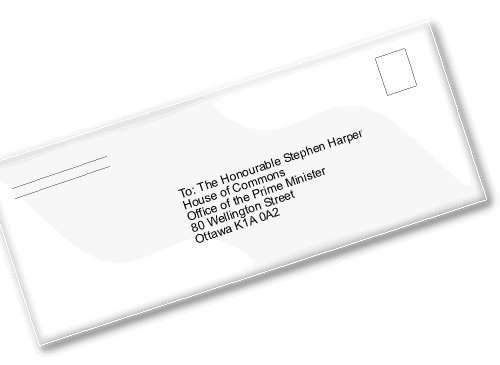
To: The Honourable Stephen Harper
House of Commons
Office of the Prime Minister80 Wellington StreetOttawa K1A 0A2pm@pm.gc.ca or harper.s@parl.gc.caFax: 613-941-6900 or 613-995-5176

Re: Mr. Huseyincan Celil
(A Canadian Citizen who is in detention in Tashkent, Uzbekistan since March 26, 2006)


Dear Mr. Harper,

As you know, a Canadian citizen, Huseyincan Celil, is still in detention in Tashkent, Uzbekistan. He is in danger of deportation to China where he will be most likely to be imprisoned, tortured, or eventually executed. We cannot let Uzbekistan or China to abuse, torture, or endanger the life of a Canadian citizen. We would not trust the justice system in these countries as they have a long record of Human Rights violations.

Canada is recognized as a peace loving country and a symbol of hope. We would like Mr. Huseyincan Celil to be freed, reunited with his family, and live peacefully again in Canada.

We urge your government to consider this matter as a priority and expedite a favorable resolution. We trust your government would deem this situation on the alert.

We look forward to hear from you soon


Yours sincerely,

__________________________

__________________________

2006/04/11

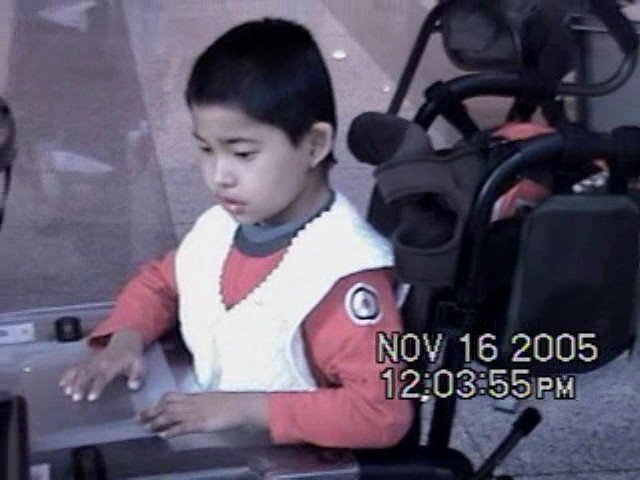
Celil's handicapped son is in need of intensive care


His friends at Ebu Bekir Islamic Centre are worrying about his son who is in need of intensive care. His son, Muhammad, can not walk, talk and able to appricite his needs at all. There must be always an assistance required. In Canada Theese problems were much lesser with the help of social assitances. Below there is a letter from his friends at Ebu Bekir Islamic Centre that shows thier concern about this disregarded point, which is a touchy aspect of Huseyincan Celil's life.

The Letter;

Last Ramadan everyday in the Ramadan Nigt Prayings, I heard Husyincan(our imam in the salat) cry and ask Allah the healness and recover for our patient. I realized he has a very close and lovely one sick. Then, after I talked to him I understood what was behind his prayings and his cry all Ramadan.

In Burlington city there is a school that his child attends with two teachers taking care of him a half of a day, the rest of the day one of his parent must watch him so he needs help 24 hour in a day, he can't eat or raise his hand or go to washroom by himself he is almost totally paralyzed from doing anything by himself ( even he fails to control his saliva from his mouth), if you look at him you can't hold your tears.
I met him twice, I felt my heart broke, I astonished how his parents handled him all these years. He uses special medications continuously. His problems started from his birth, from that time he gave his parent (may all help them) extremely hard time. It is a test from Allah to their patient. They are really patient and sacrificed a lot. We worried about his mother, how she can handle this child alone, how can she cover very expensive medications for his handicapped child in addition to the responsibility of her other children, may Allah help her.

Urge Walmart to Pressure China


By Theresa Moore, HamiltonThe Hamilton Spectator(Apr 11, 2006)
Re: 'Extradition fight' (April 8)
Since it seems inevitable that Huseyincan Celil will face extradition to China, the most logical step is to request those with influence to bear upon the Chinese government for his freedom.
Wal-Mart is China's fifth largest trading partner. An e-mail, phone call and letter campaign to Wal-Mart executives requesting their intervention in this human rights case may be as effective as anything else.

2006/04/10

Ebu Bekir Islamic Center is trying to help Huseyincan Celil

Ebu Bekir Islamic Center in East Hamilton where Huseyincan Celil used to be teach and obliged by his enormous effort. Plese visit there and provide your contribution